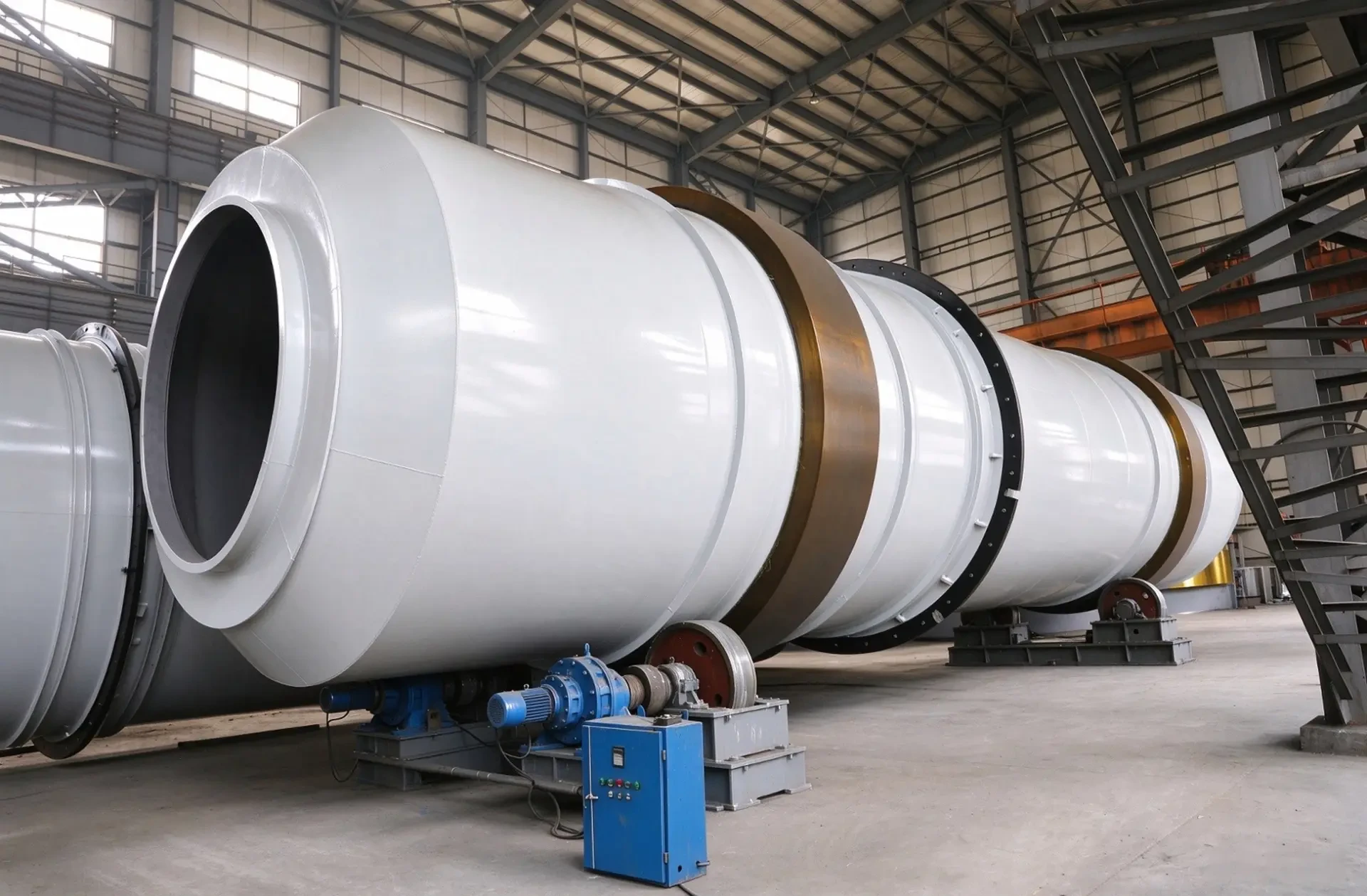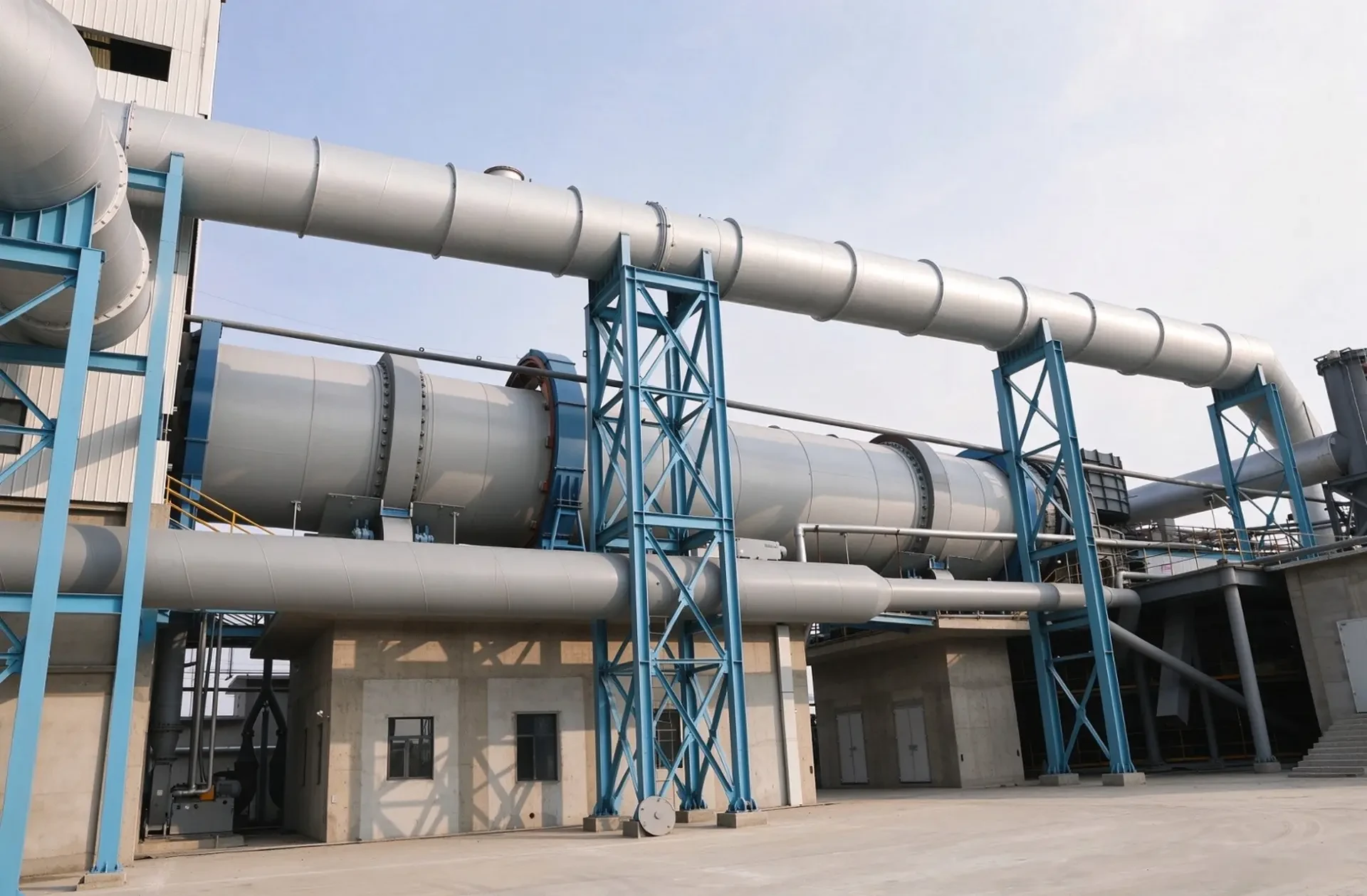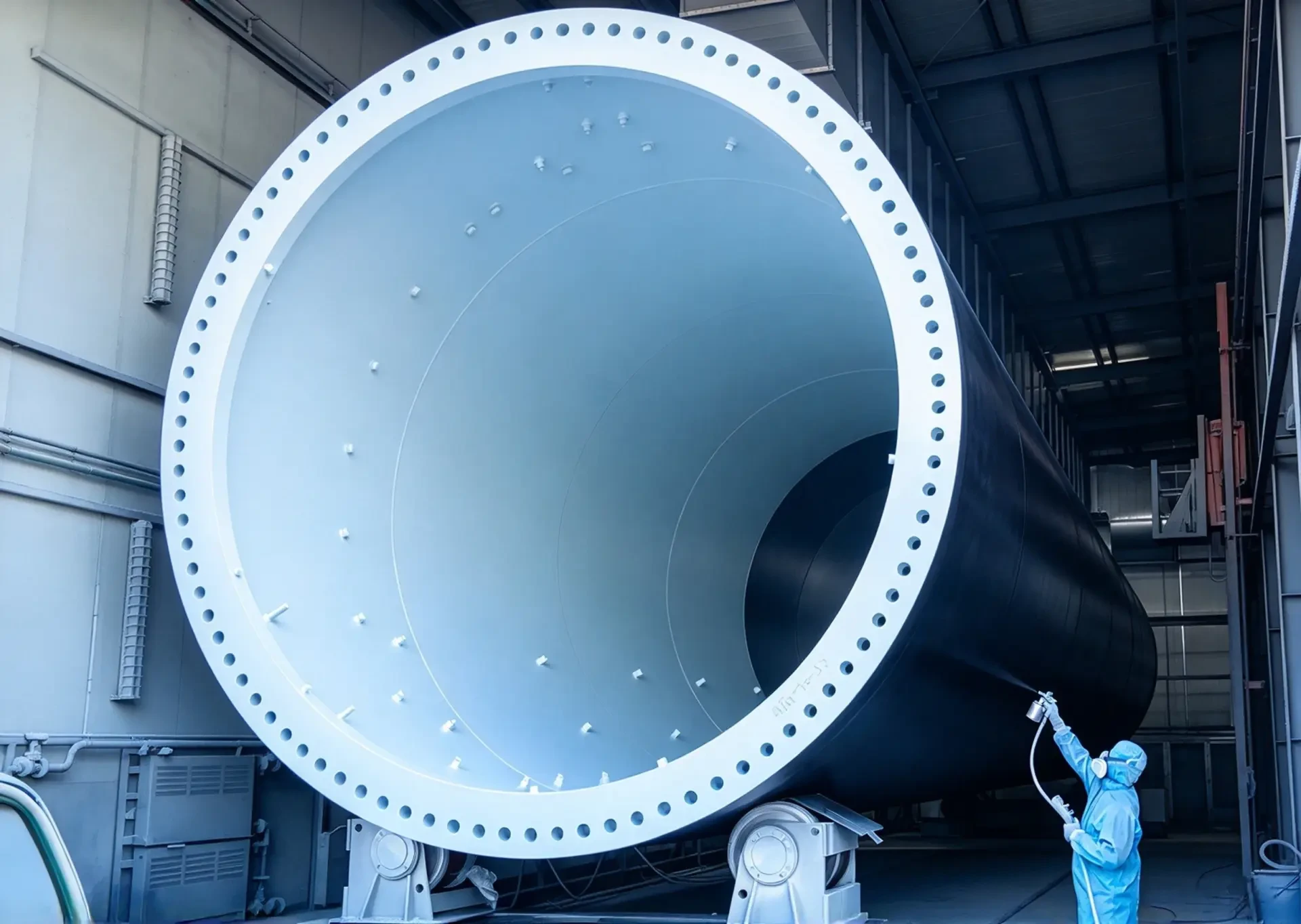
An iron ore pelletizer is a machine that agglomerates fine granular material — most commonly ground iron ore concentrate — into uniform green balls by controlled rotation and metered water. In a pelletizing plant it sits between mixing and induration: fines go in, pellets come out, and an induration furnace turns the green balls into finished pellets. This guide covers the difference between disc and drum pelletizers, how the QP50–QP75 disc range is sized, what water control actually does, how the pelletizing line fits together, and what drives the price.
DMTC Mining manufactures disc pelletizers in Dalian, China — part of a heavy industry group operating since 1959, with two production bases covering 450,000 m² and, by company data, 100+ countries served and 5,000+ equipment units delivered.
What Is a Pelletizer?
Pelletizing is the agglomeration of fine material into spherical green balls — in iron ore practice, typically 8–16 mm in diameter (a standard process range; the target size is set by the induration step and your customer spec). A pelletizer does this mechanically: the feed is spread in a rotating vessel, water is added in controlled amounts, and the tumbling motion makes the particles roll into balls that grow until they roll away from the bed.
Why pelletize at all: fine ore that is too small to use directly becomes a strong, uniform, furnace-ready product. The same logic applies to metallurgical dust and return fines — material that would otherwise be lost — and to fertilizer and chemical powders that need granulation for handling and dosing.
Disc vs Drum Pelletizers: Which One Fits Your Feed?
Two machine families dominate pelletizing:
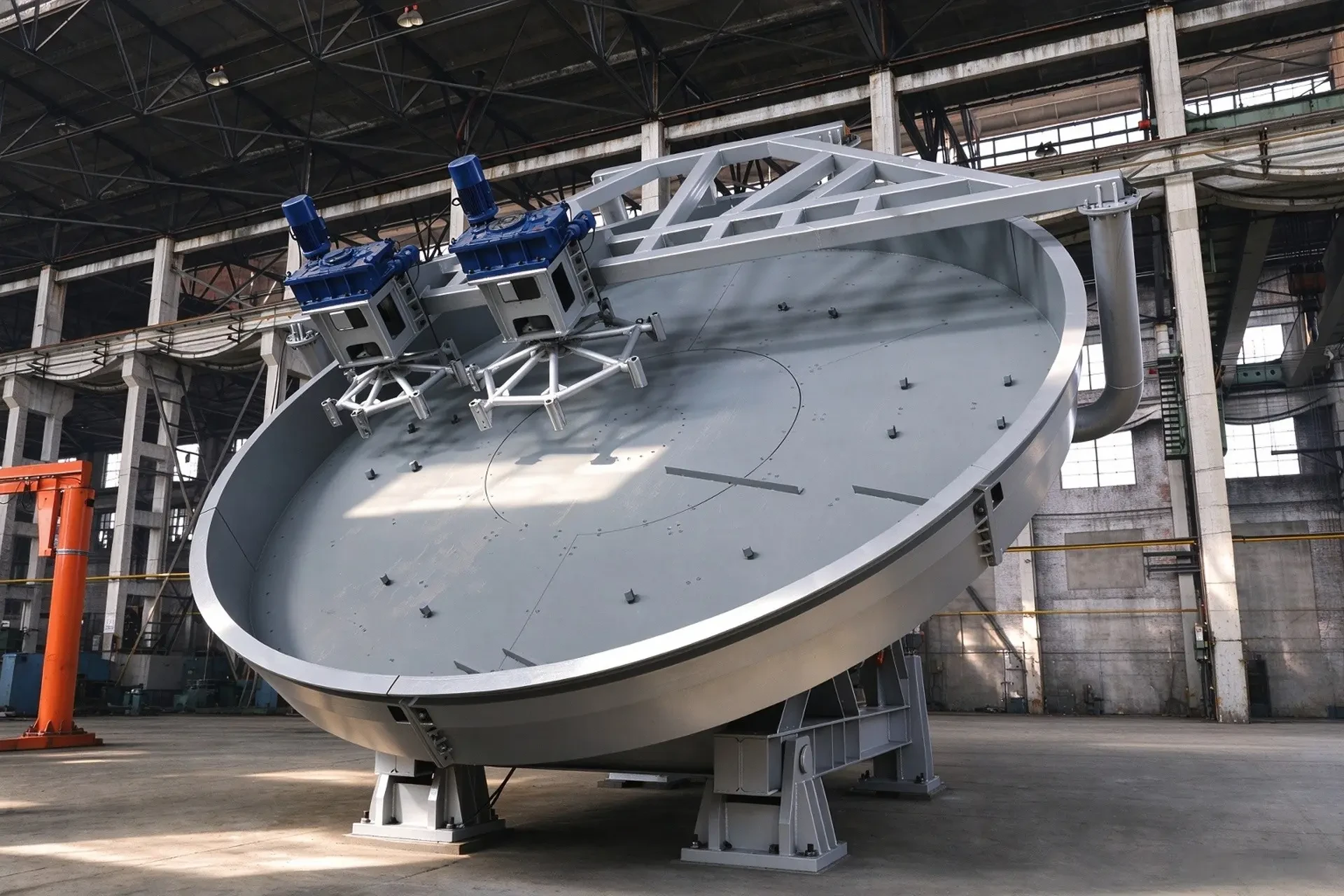
Disc (pan) pelletizers — a shallow, tilted, slowly rotating disc. The material bed is a shallow layer, water is controlled along the rim, and the installed height is low. Strong size control makes discs a common choice for iron ore concentrate and fine ore.
Drum pelletizers (tumblers) — an inclined rotating drum with lifting flight liners. The pellet bed is deeper; drums suit high throughputs per unit diameter and stickier feeds.
DMTC Mining's pelletizer line is the disc type — the QP50, QP60 and QP75, with disc diameters from 5000 mm to 7500 mm. Both types appear in real plants, sometimes on different duty lines, so the choice is a process decision, not a brand decision.
Inside the Disc Pelletizer: Angle, Speed and Water Control
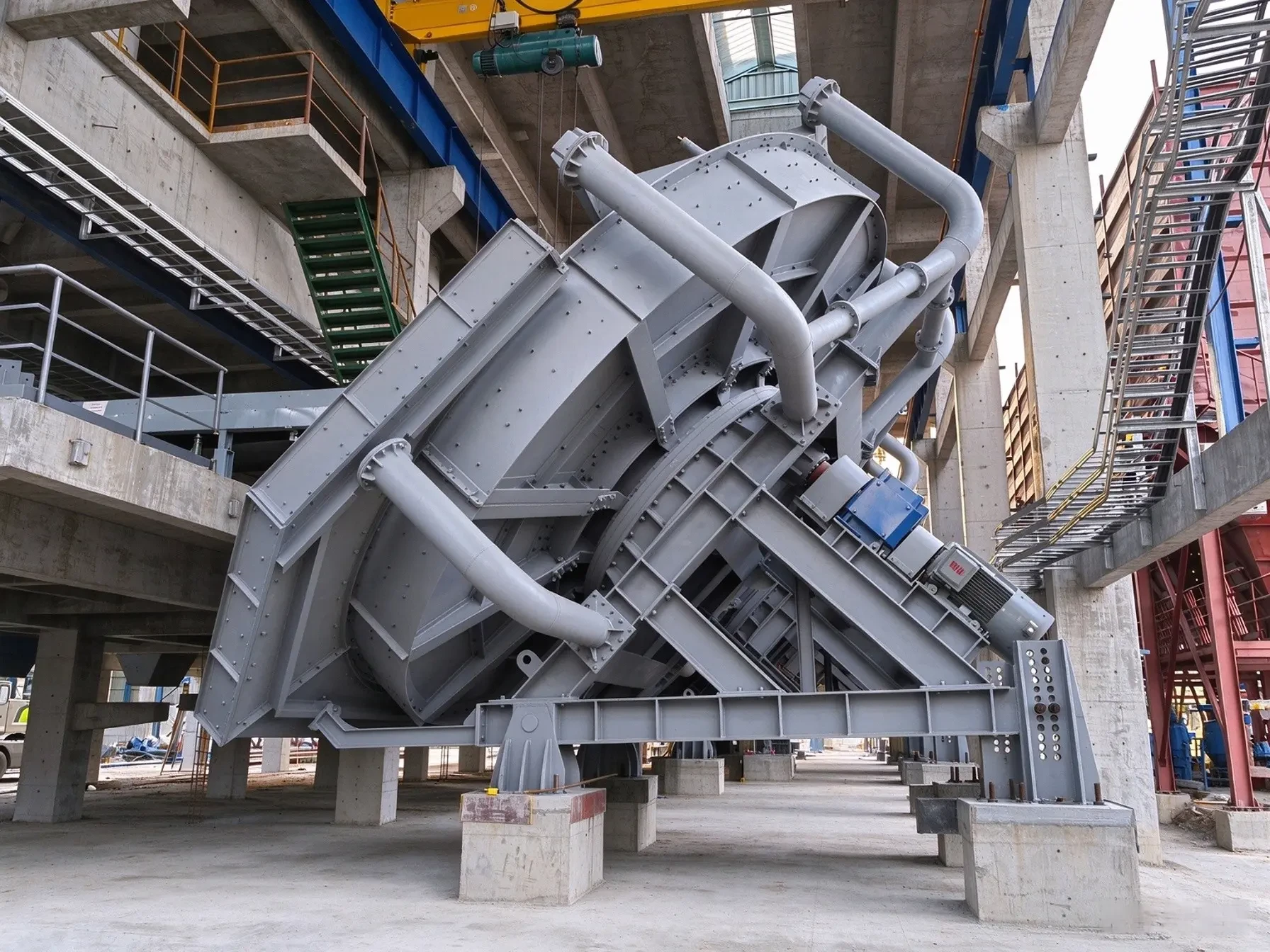
Three settings do most of the work on a disc machine:
Pan inclination. Across the QP50–QP75 range the inclination is adjustable from 43° to 53°. A steeper angle lets finished pellets escape the bed faster; a shallower angle keeps material in the bed longer.
Rotation speed. The QP50 runs 6–8.5 r/min, the QP60 offers 6 / 6.5 / 7 / 7.5 r/min, and the QP75 runs 7–11 r/min. Speed sets the bed height and the rolling energy of the layer.
Water control. Rim water flow plus any spray water sets the moisture trajectory of the bed. Too little water and pellets stay dry and small; too much and the bed slumps and the size distribution widens. Water control is the operator's main lever on pellet quality.
Drive quality matters as much as geometry: the QP series is a heavy-duty construction with an optimized transmission mechanism, built for reliable continuous operation with easy maintenance.
Sizing a Pelletizer: Diameter, Throughput and the QP50–QP75 Range
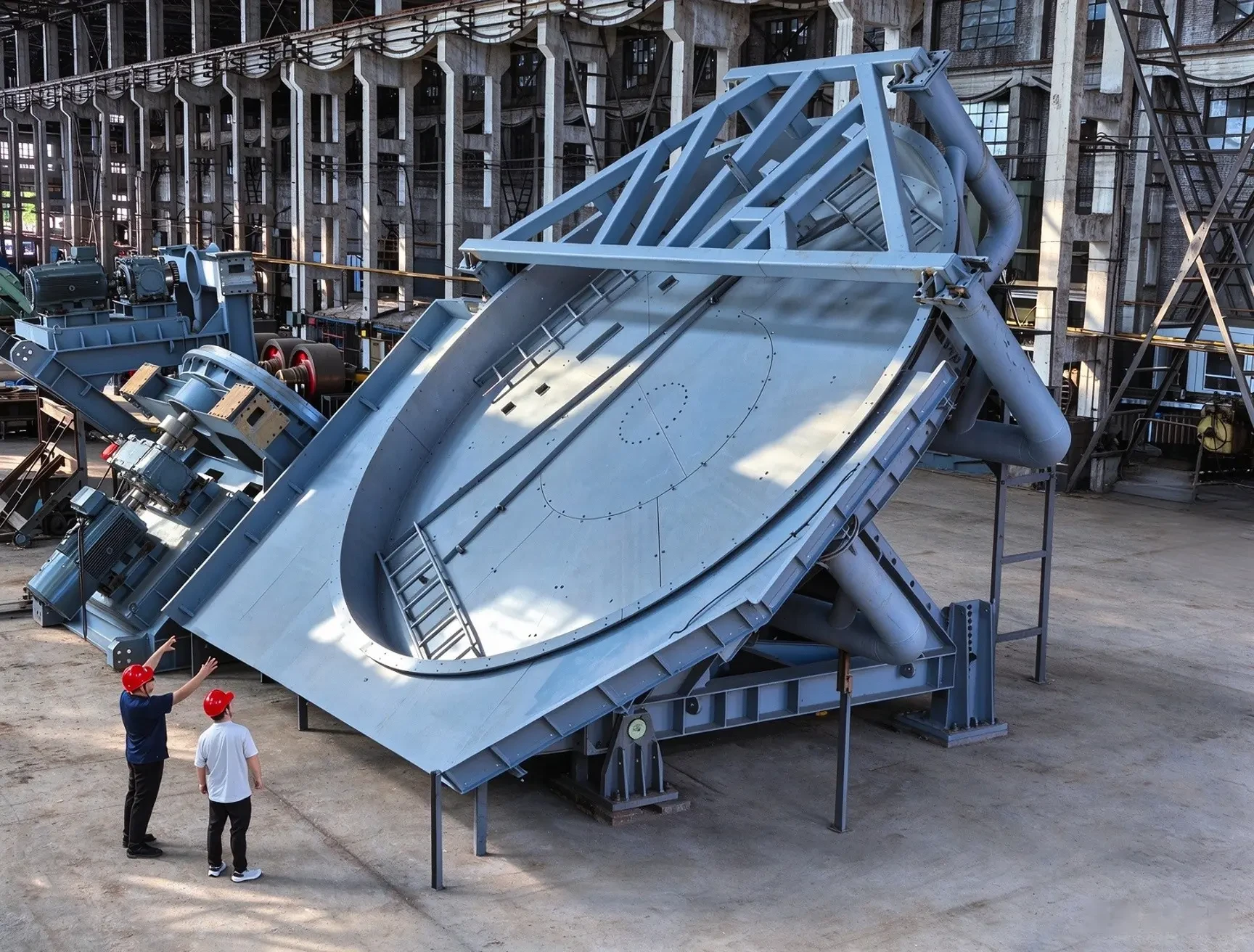
The disc pelletizer range as published in the DMTC Mining catalogue:
| Model | Disc diameter | Inclination | Rotation speed | Capacity | Power |
|---|---|---|---|---|---|
| QP50 | 5000 mm | 43–53° | 6–8.5 r/min | 20–30 t/h | 75 kW |
| QP60 | 6000 mm | 43–53° | 6 / 6.5 / 7 / 7.5 r/min | 56–84 t/h | 110+ kW |
| QP75 | 7500 mm | 43–53° | 7–11 r/min | 90–120 t/h | 160 kW |
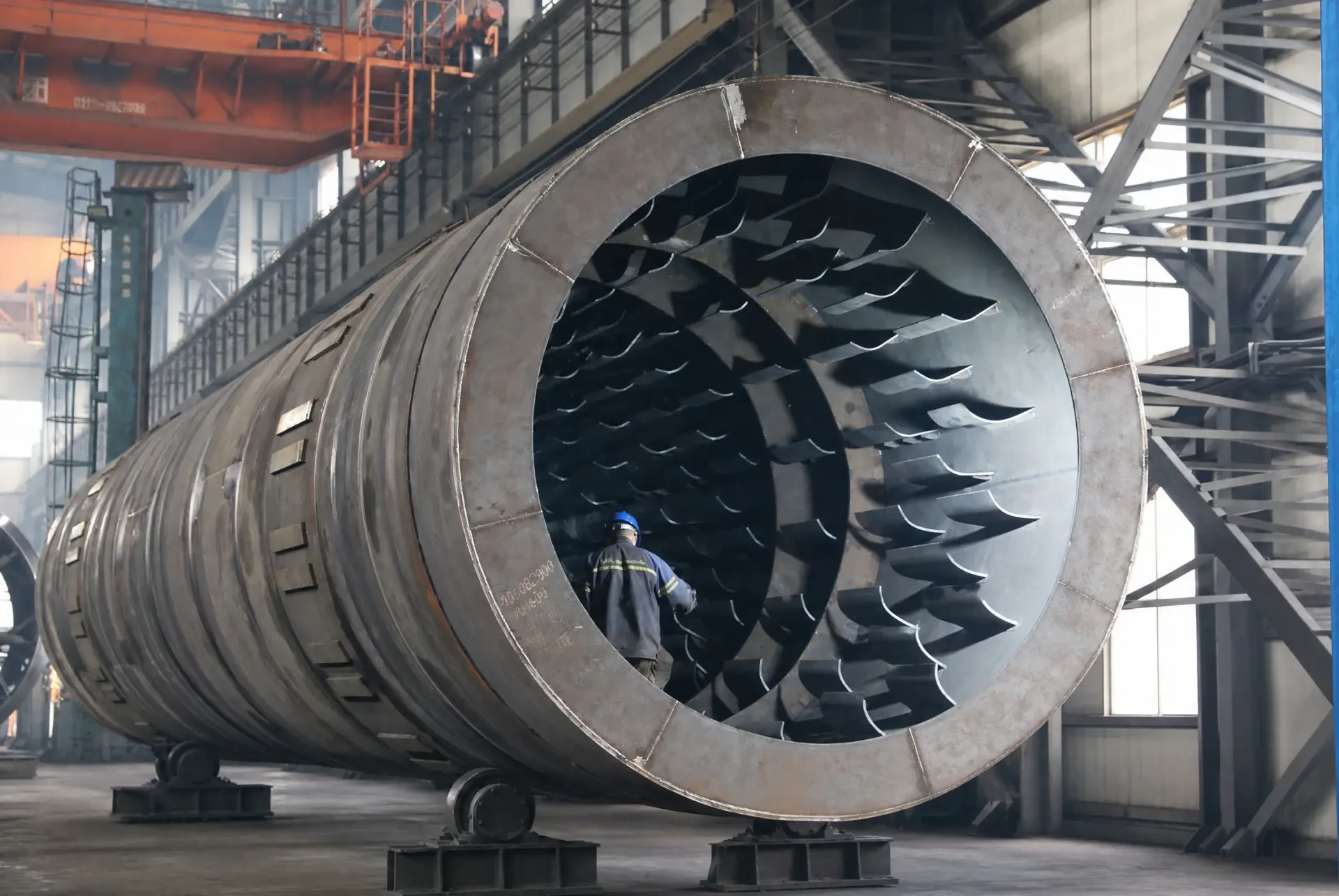
The logic is simple: capacity scales with disc area and bed residence time — 20–30 t/h at 5 m, 56–84 t/h at 6 m, 90–120 t/h at 7.5 m. The range extends to large-size structures with a diameter of 7.5 meters or more, and each machine is fully customizable to project requirements. A disc pelletizer from this family, assembled in the DMTC Mining workshop, is shown in the cover photograph of this guide.
The Pelletizing Plant: From Grinding and Mixing to Induration
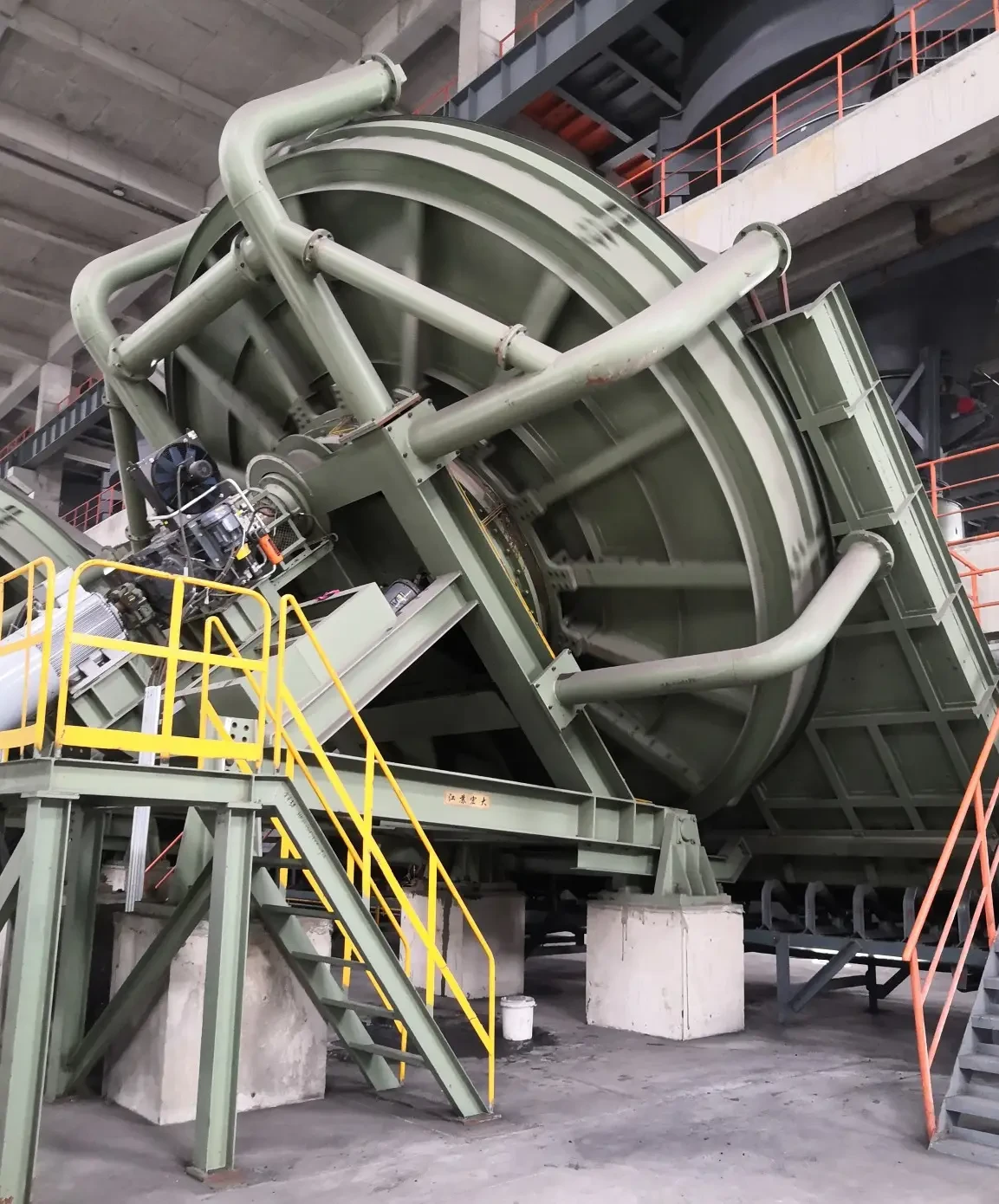
A pelletizer is never bought alone — it is one stage of a line:
Grinding — the ore is ground to pelletizing feed size.
Mixing — primary and secondary mixing drums bring the fines, the binder (bentonite in typical iron ore practice) and the water to a uniform bed. DMTC Mining drum mixers span φ3.2×13 to φ7.5×50 m at 3–7 r/min, covering first- and second-stage duty.
Pelletizing — the disc pelletizer forms the green balls; 20–120 t/h per machine across the QP50–QP75 range.
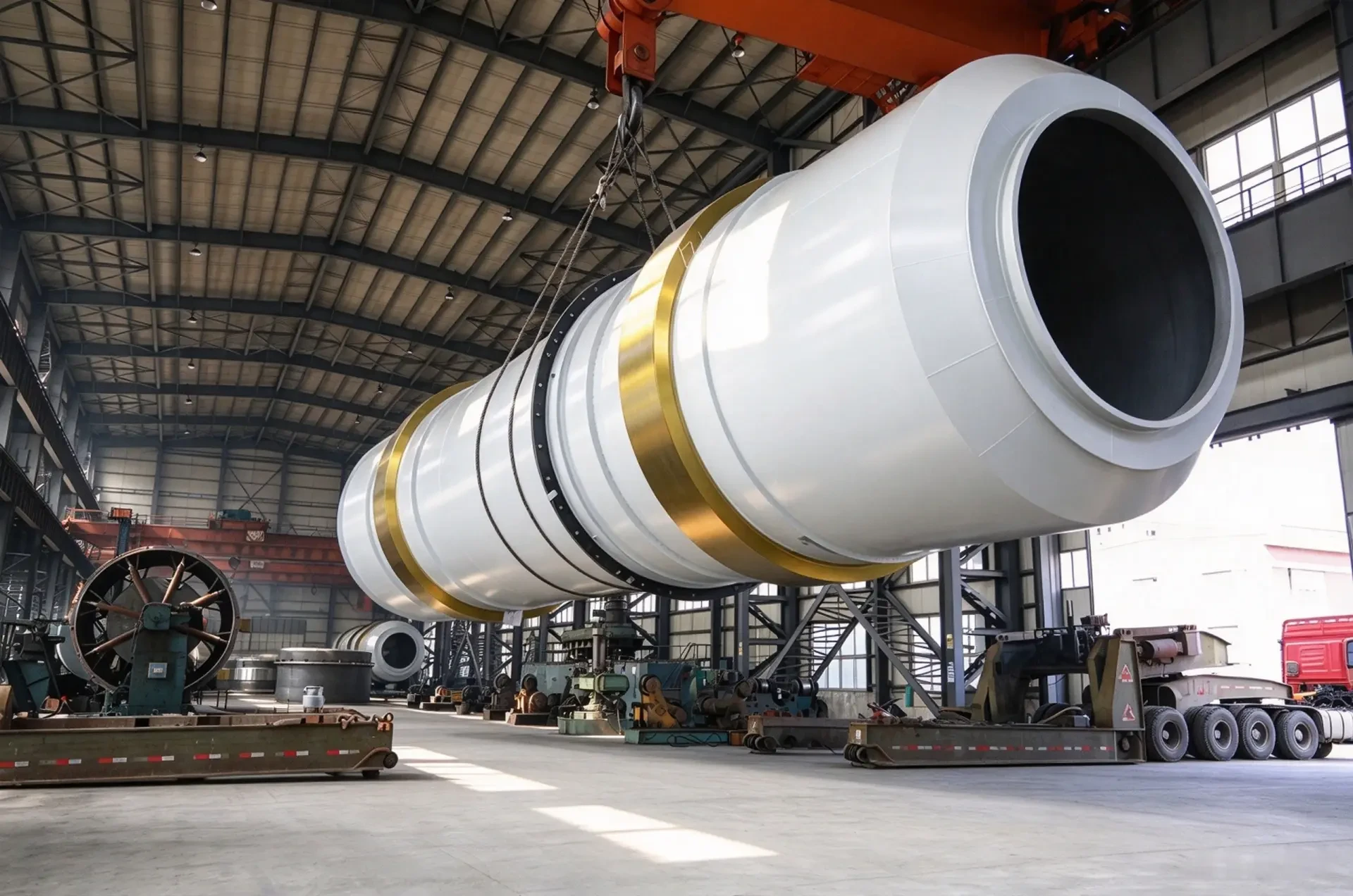
Induration — the green balls are fired into finished pellets, typically around 1,250–1,300 °C in grate-kiln practice (a standard process range). Our rotary kiln buyer's guide covers the thermal side.
For metallurgical dust and return fines the same line logic applies with a shorter front end — that material often skips grinding and goes straight to mixing and pelletizing, which is exactly where a disc machine earns its keep.
Pelletizer Machine Price: What Drives the Cost
Pelletizers are made to order — there is no public price list, and any fixed "pelletizer price" you see online is not comparable to a real project quote. What actually moves the number:
Model and capacity — the single largest factor.
Scope: the machine only, or with drive, control and the full pelletizing line.
Wear-parts specification for your feed.
Automation level: manual, PLC, or DCS with remote monitoring.
Spare parts package.
Delivery terms (FOB / CIF).
When comparing bids, compare scope line by line. A low headline price is usually a machine with the expensive parts left out.
How to Choose a Pelletizer Manufacturer
A cheat sheet for the factory visit or the RFQ evaluation:
Track record — by company data: 100+ countries served, 5,000+ equipment units delivered, 20+ years of export experience.
Large-size capability — disc structures with a diameter of 7.5 meters or more, fully customizable to project requirements.
In-house heavy parts — precision casting, large-scale machining and full assembly under one roof; two Dalian production bases covering 450,000 m².
Group depth — part of a heavy industry group operating since 1959.
Certifications — ISO 9001, ISO 14001, ISO 45001.
Line breadth — one supplier for grinding, mixing, pelletizing, roasting (kilns) and separation; bilingual EN/RU technical documents for Russian-speaking projects.
Full specifications for the pelletizer, the drum mixer and the rotary kiln system are in the catalogue at www.dmtcmining.com — in English and Russian.
Frequently Asked Questions
What size pellets does a disc pelletizer produce?
Typically 8–16 mm green balls in iron ore practice (a standard process range); the exact distribution depends on the feed and the water control. Send your target pellet spec and we will set the design point with it.
Can it handle materials other than iron ore?
Yes. The published application range covers green-ball pelletizing of iron ore concentrate and fine ore, pelletizing of metallurgical dust and return fines, and granulation of fertilizer and chemical powders.
What is the largest machine in the range?
The QP75, with a 7500 mm disc and 90–120 t/h capacity; the range extends to large-size structures with a diameter of 7.5 meters or more.
How do we get a price?
Quotes are made per project. Send your feed material, required throughput and target pellet size to info@dmtcmining.com or through the contact page.