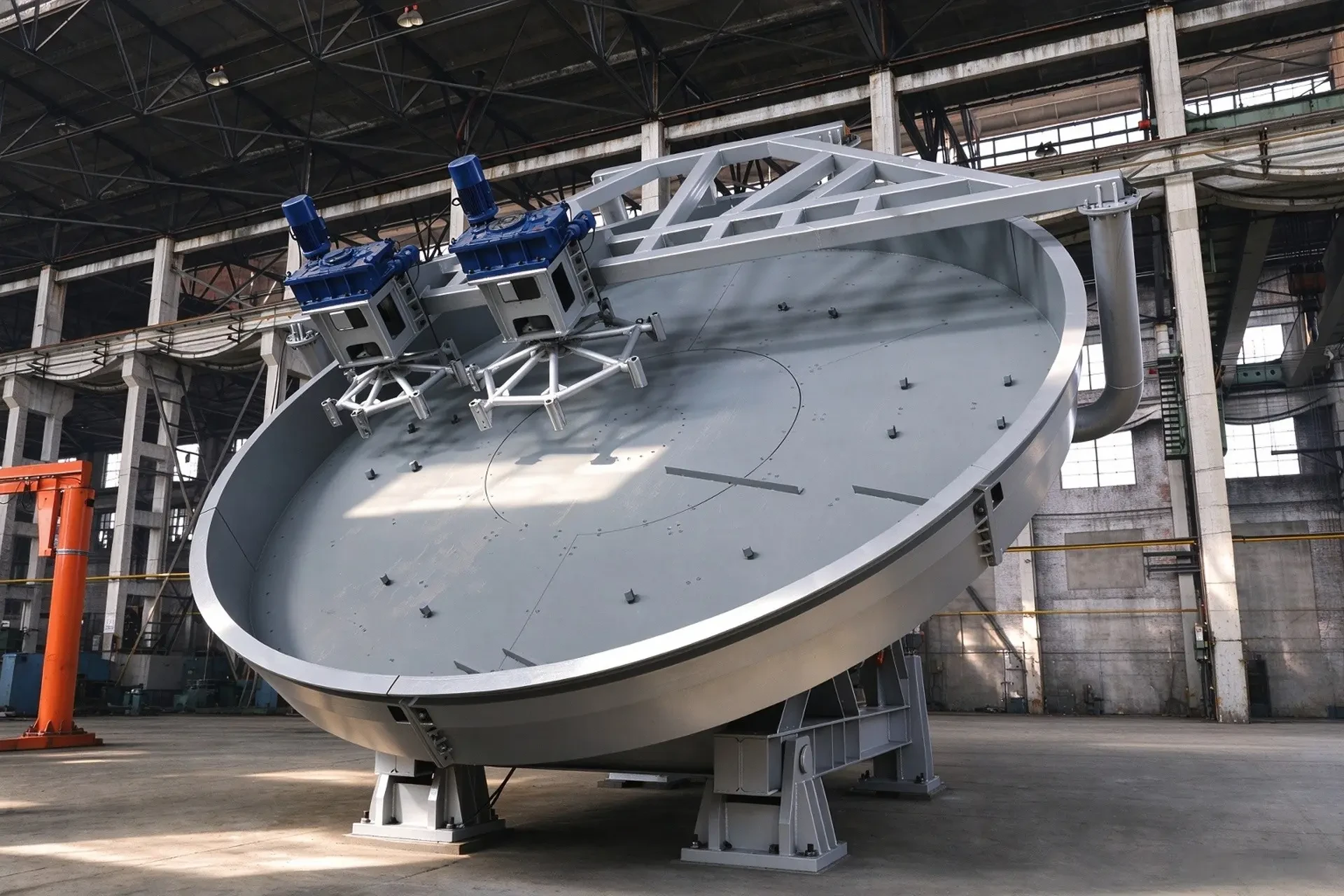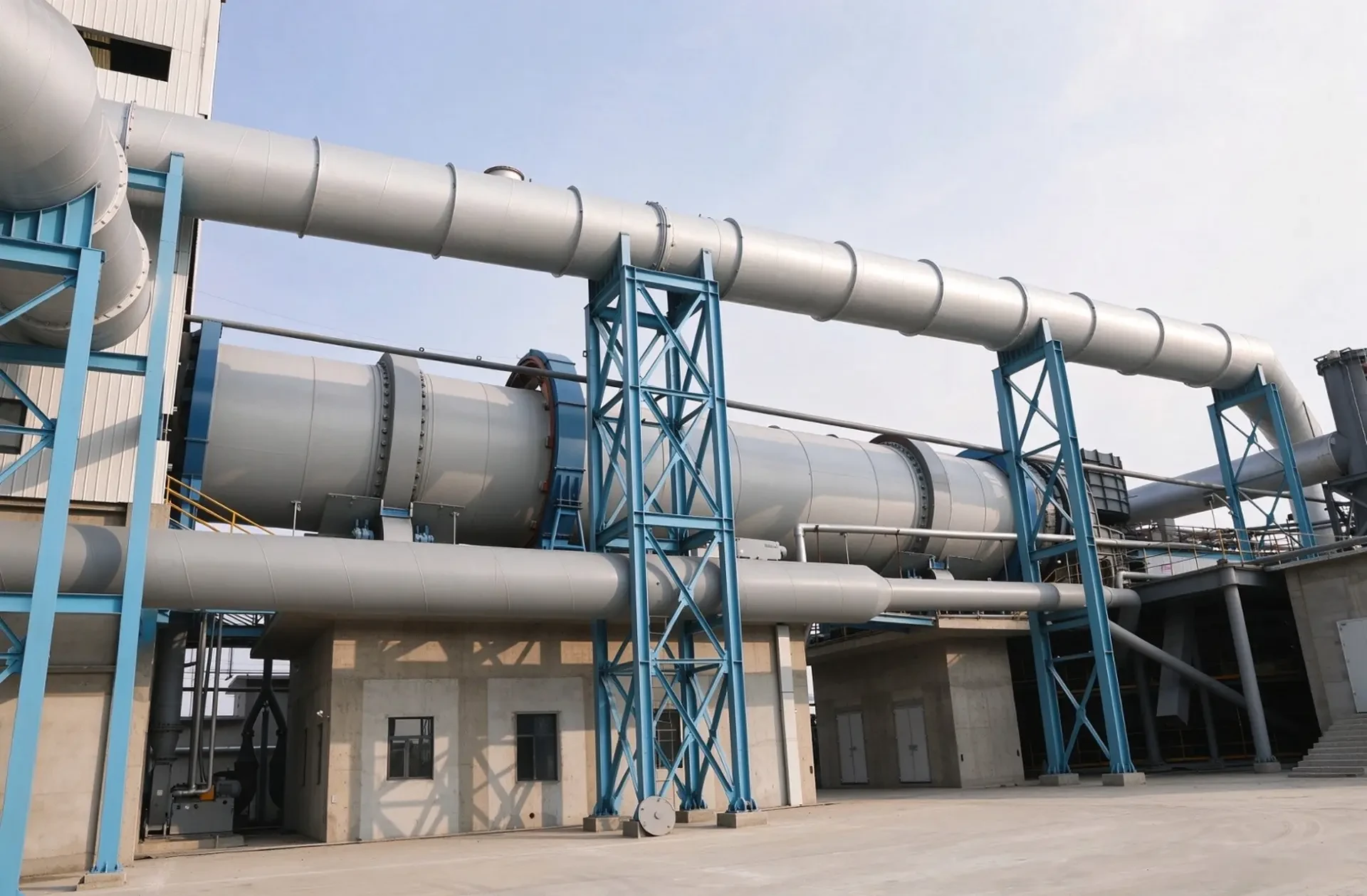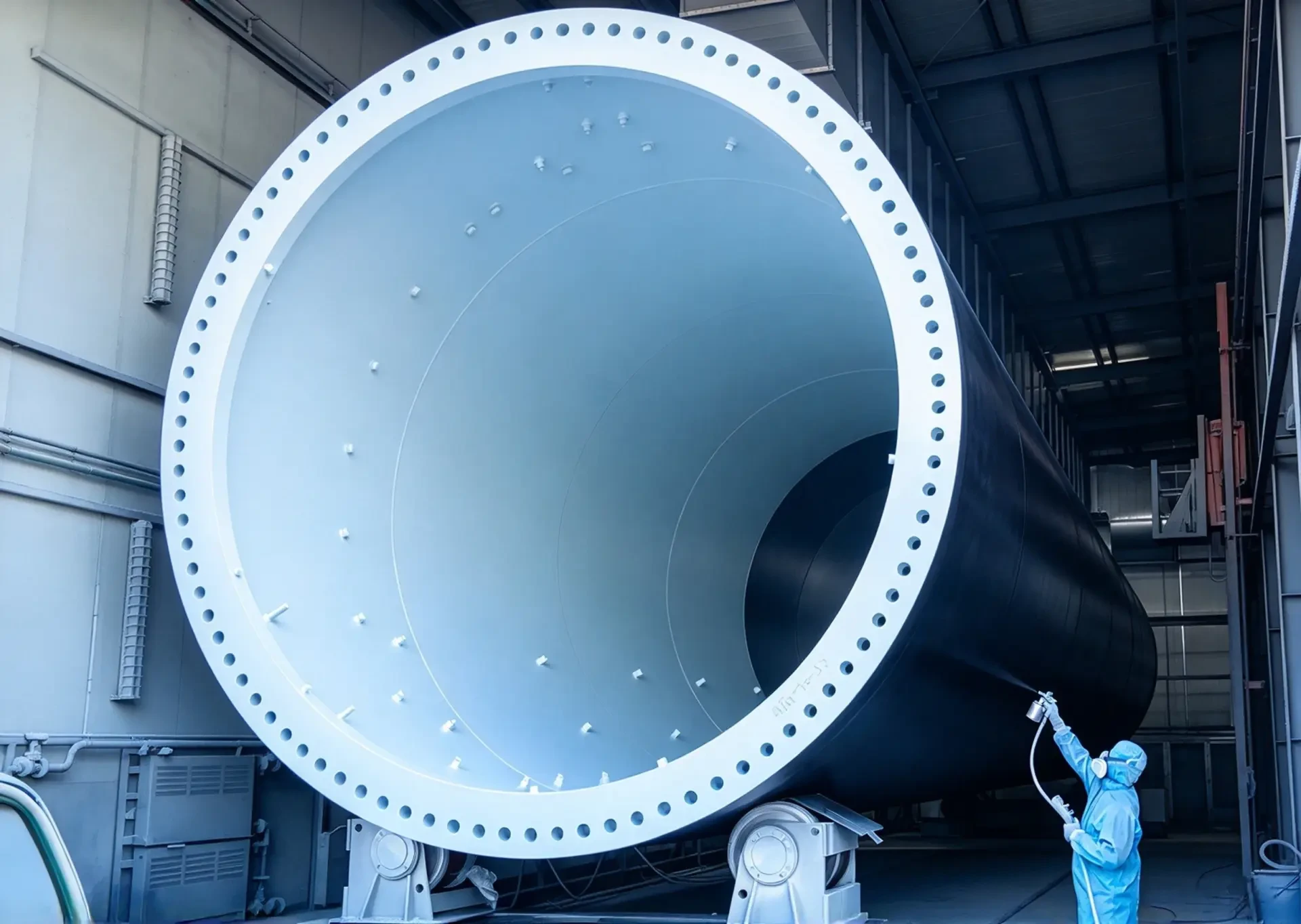
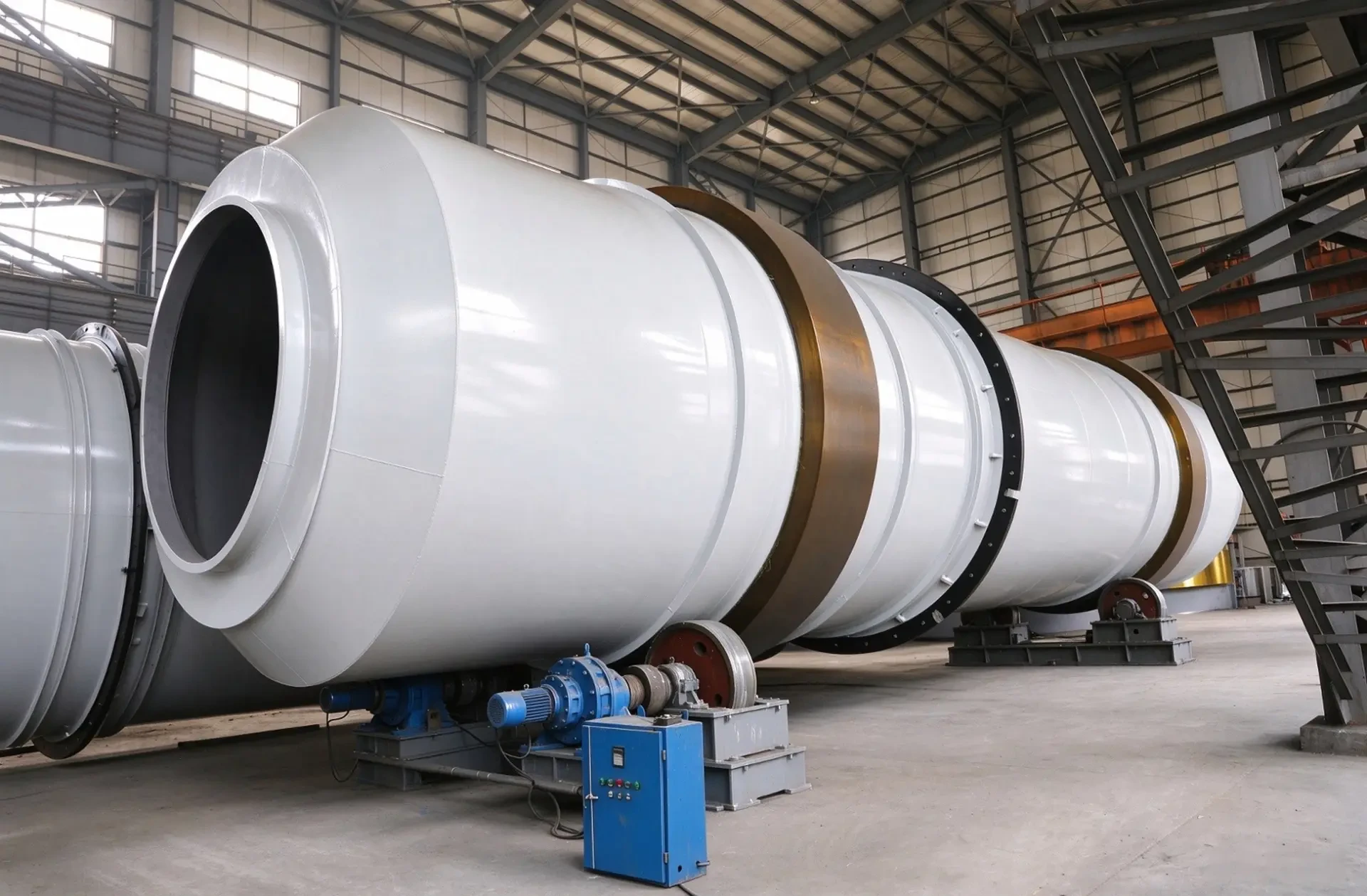
A rotary drum mixer is a large inclined rotating shell that blends and conditions fine feed — in iron ore practice, the pelletizing or sintering charge with its binder and water — by cascading the material through the shell as it turns. In the DMTC Mining range, shells run from φ3.2×13 m to φ7.5×50 m with 355–1600 kW main motors, in primary and secondary duty at 3–7 r/min.
DMTC Mining is a Chinese manufacturer of mining and mineral processing equipment based in Dalian, exporting to 100+ countries. By product data, its drum mixers are part of a line with over 800 installations across 300+ enterprises globally — and the company itself is part of a heavy industry group operating since 1959, with two production bases covering 450,000 m².
What Is a Rotary Drum Mixer?
Mixing is the step where the raw charge becomes a uniform bed: ore fines, binder (bentonite in typical iron ore practice) and water are brought to even composition and even moisture before pelletizing or sintering. A rotary drum mixer does this inside a large inclined shell: the shell turns slowly, the material cascades and turns over many times, and the bed leaves the drum homogeneous.
Why it matters downstream: pellet quality tracks mixing quality. Uneven moisture or binder distribution means a wider pellet size distribution in the pelletizer and weaker indurated pellets. For sintering, uneven charge moisture is a direct combustion problem in the sintering machine. The mixer is a small share of the line budget, but it protects everything after it.
Primary vs Secondary Mixing: Two Stages, Two Settings
Most pelletizing plants run two mixing drums in series. The primary mixer does the main homogenization and most of the water addition; the secondary mixer trims moisture, finishes homogenization and conditions the bed just before the pelletizer. In the DMTC range the two stages run at different settings:
Primary mixers — shell speed 6–7 r/min, inclination 1.5–2.5°.
Secondary mixers — shell speed 5–7 r/min, inclination 1.1–2.5°.
The overlap is not a contradiction: each stage is tuned to its duty, and the catalogue covers both across the same shell sizes.
Inside the Drum: Speed, Inclination and Retention Time
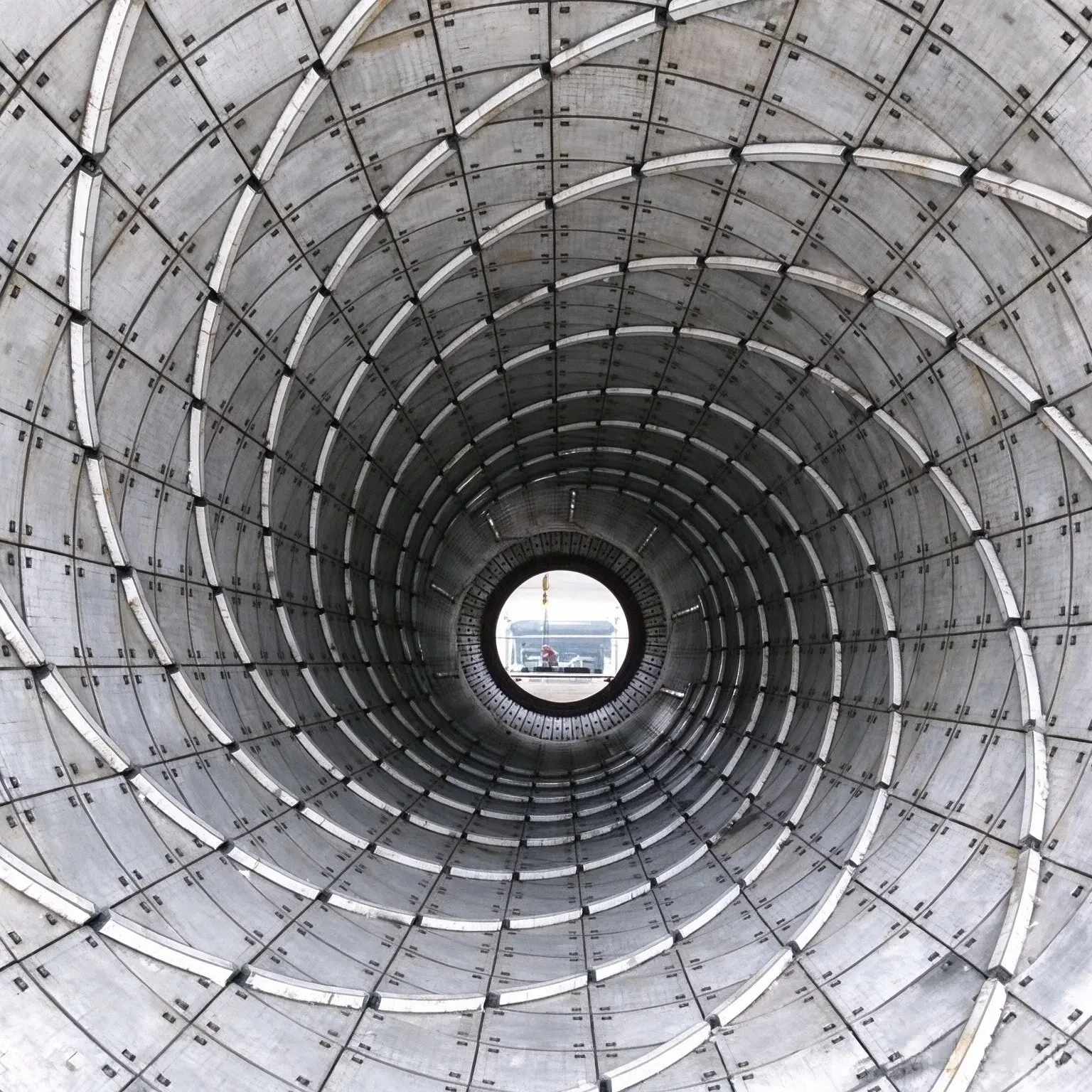
Three settings do most of the work:
Shell speed. 6–7 r/min for primary mixers, 5–7 r/min for secondary mixers, and the largest shells run 3–5 r/min. Speed sets cascade height and how fast the bed turns over.
Inclination. 1.5–2.5° for primary, 1.1–2.5° for secondary. A steeper shell shortens material residence; a flatter one lengthens it.
Retention time. Residence follows from shell length, inclination and speed, and it sets how many times the charge turns over before discharge (standard design logic for this equipment class).
In large mixing drums, lifting flights on the shell inner surface cascade and lift the bed as the shell turns — standard design practice for this equipment class. Main motor power in the catalogue runs from 355 kW at φ3.2×13 up to 1600 kW at the largest shells.
Sizing: the DMTC Drum Mixer Range
Representative rows of the range as published in the DMTC Mining catalogue:
| Type | Shell | Shell speed | Inclination | Main motor |
|---|---|---|---|---|
| Primary | φ3.2×13 m | 6–7 r/min | 1.5–2.5° | 355 kW |
| Primary | φ5×24 m | 6–7 r/min | 1.5–2.5° | 1400 kW |
| Secondary | φ5.1×25 m | 5–7 r/min | 1.1–2.5° | 1600 kW |
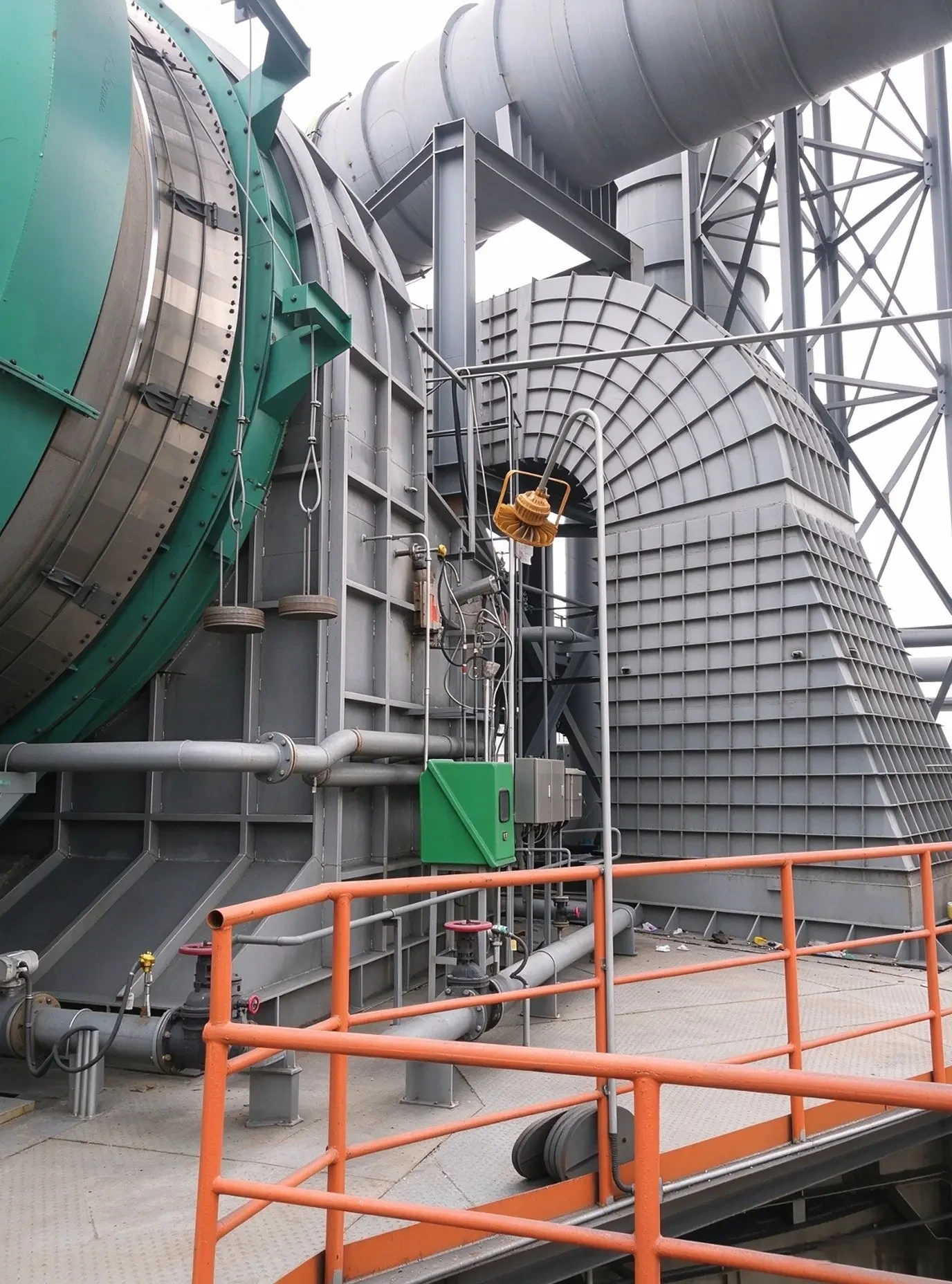
The full catalogue spans φ3.2×13 to φ7.5×50 m at 3–7 r/min; the largest shells run 3–5 r/min with 1600 kW main motors. Output in this class is published as a function of process conditions rather than a fixed number — the same shell moves different tonnages with different feed moisture and density, which is why quotes are made per project. The full 22-row parameter table is on the drum mixer product page.
Why Mixing Uniformity Matters: Moisture, Bentonite and the Bed
In iron ore practice the mixer charge is fines plus bentonite binder plus water (a standard process formulation; the ratios are set by the ore and the target pellet). The drum's job is to bring every part of the charge to the same moisture and binder distribution:
Too little water — the bed runs dry, the pelletizer makes small, weak balls.
Too much — the bed slumps, the size distribution widens and the pelletizer overloads.
Uneven binder — pellet strength varies from batch to batch.
Even a modest mixing drum keeps the pelletizer — see our disc pelletizer range and the pelletizer buyer's guide — running at a stable set point instead of chasing moisture swings.
The Drum Mixer in the Line: Where It Sits
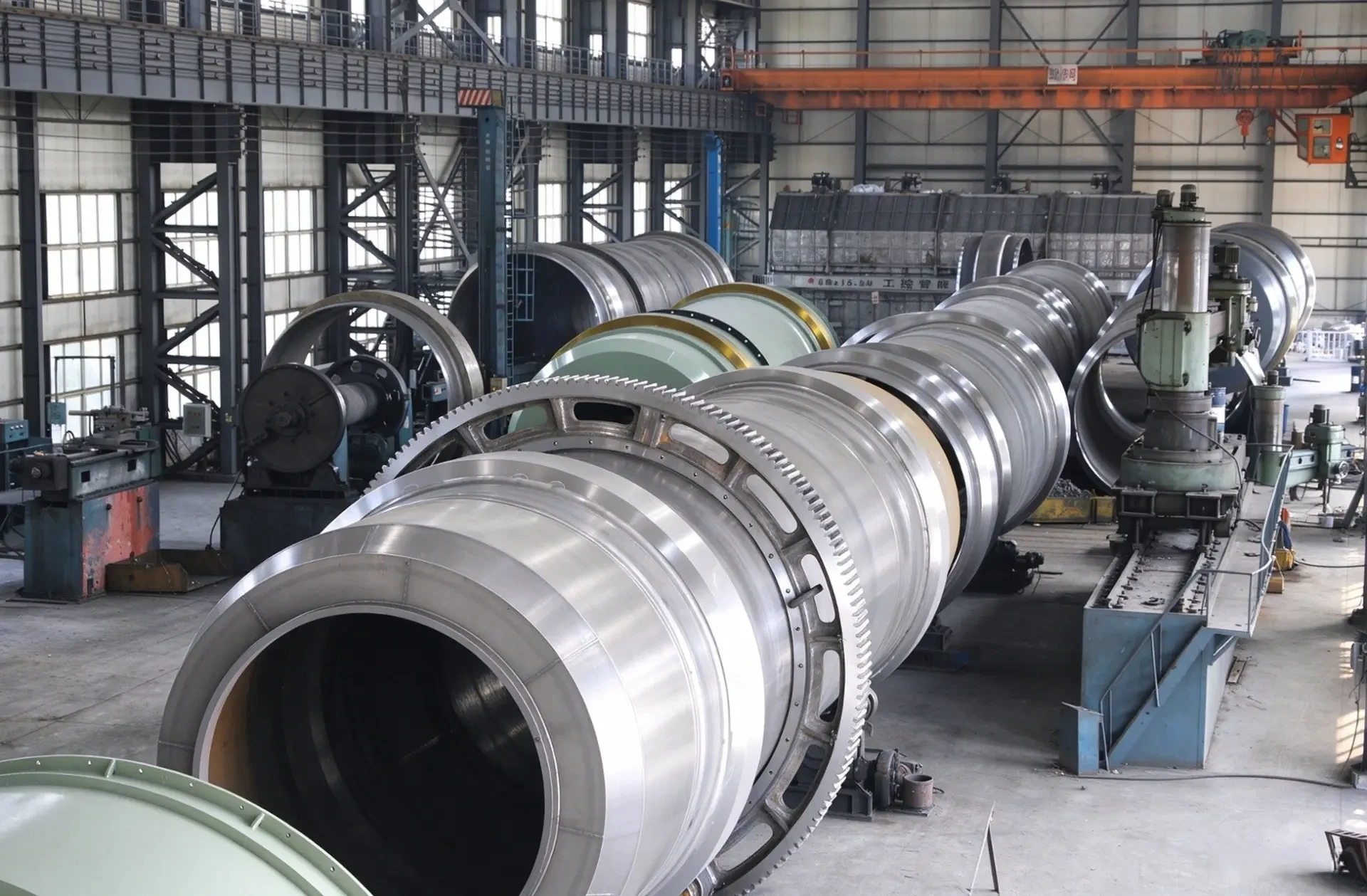
A drum mixer is never bought alone — it is one stage of a line:
Receiving and blending — the stockyard blend of fines, binder and additives.
Mixing — primary and secondary drums, from φ3.2×13 up to φ7.5×50 m shells in the DMTC catalogue.
Pelletizing — the disc pelletizer forms the green balls.
Induration — the green balls are fired; our rotary kiln buyer's guide covers the thermal side.
For sintering plants the same logic applies with the mixer feeding the sintering machine instead of a pelletizer. The published applications of this equipment are primary and secondary mixing of sinter burden, blending and homogenizing of metallurgical and mineral raw materials before pelletizing or sintering, and mixing of bulk powder and granular materials in building-material and chemical plants.
Drum Mixer Price & Manufacturer Checklist
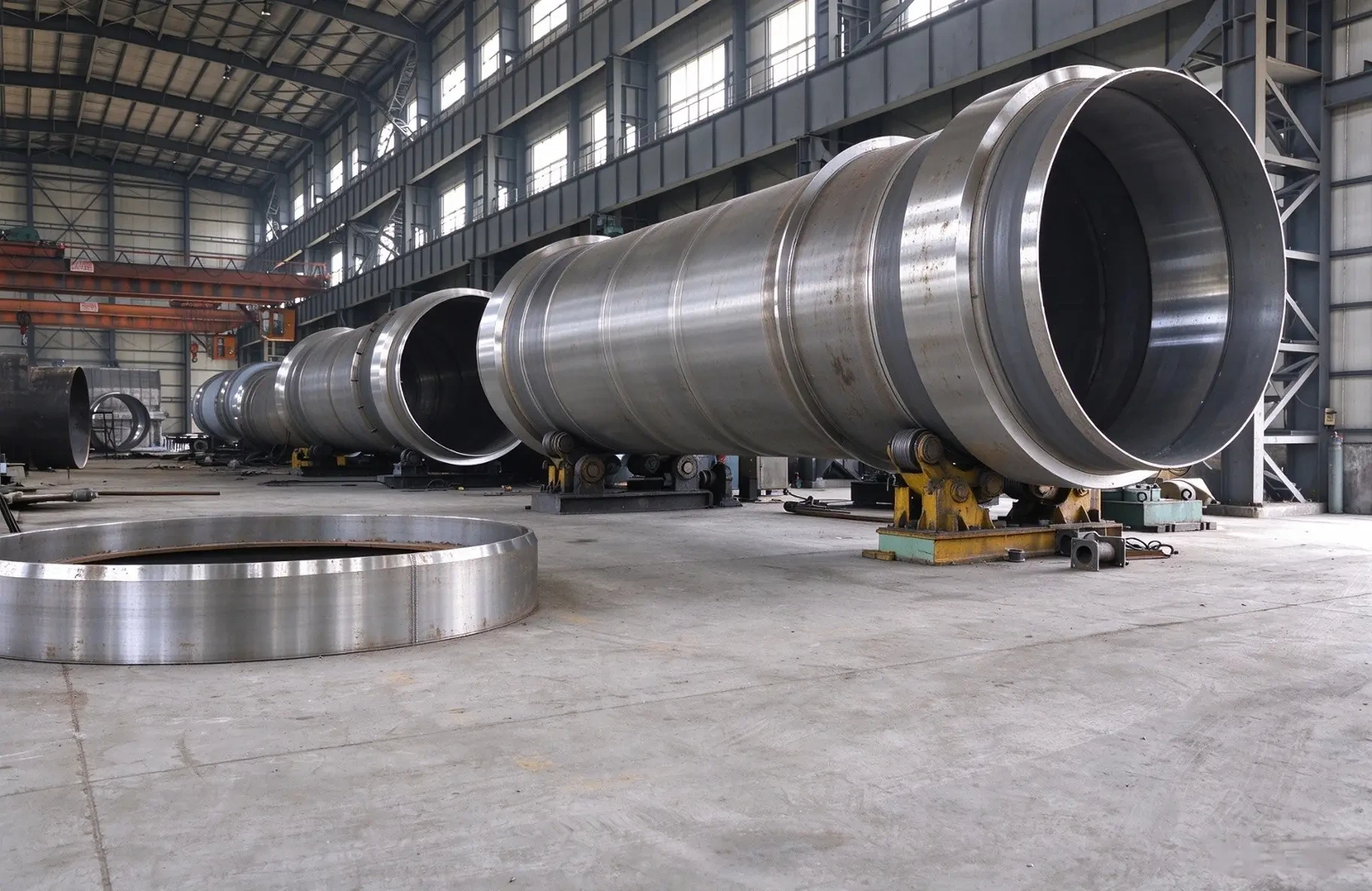
Drum mixers are made to order — there is no public price list, and any fixed "drum mixer price" you see online is not comparable to a real project quote. What actually moves the number:
Shell diameter and length — the largest factor, from 355 kW at φ3.2×13 to 1600 kW at the largest shells.
Duty: primary or secondary, and the speed/inclination set point.
Lining and flight specification for your feed.
Drive and automation level.
Scope: a single drum or a primary + secondary pair.
Delivery terms (FOB / CIF).
A checklist for the factory visit or the RFQ evaluation:
Installations — by product data: over 800 installations across 300+ enterprises globally.
Large shells — catalogue to φ7.5×50 m, 1600 kW main motors.
In-house heavy parts — precision casting, large-scale machining and full assembly under one roof; two Dalian production bases covering 450,000 m².
Group depth — part of a heavy industry group operating since 1959.
Certifications — ISO 9001, ISO 14001, ISO 45001.
Line breadth — one supplier for grinding, mixing, pelletizing, roasting (kilns) and separation; bilingual EN/RU technical documents for Russian-speaking projects.
Full specifications for the drum mixer, the pelletizer and the rotary kiln system are in the catalogue at www.dmtcmining.com — in English and Russian.
Frequently Asked Questions
What is the difference between your primary and secondary mixers?
They run at different set points: primary mixers 6–7 r/min at 1.5–2.5°, secondary mixers 5–7 r/min at 1.1–2.5°. The primary does the main homogenization and water addition; the secondary trims moisture and conditions the bed for the pelletizer.
Why does the catalogue say output "depends on process conditions"?
Because it is true: the same shell moves different tonnages with different feed moisture, density and charge. Output is quoted per project with your feed data.
What is the largest drum mixer in the range?
Shells up to φ7.5×50 m, running 3–5 r/min with 1600 kW main motors.
How do we get a price?
Quotes are made per project. Send your feed material, duty (primary or secondary) and required throughput to info@dmtcmining.com or through the contact page.