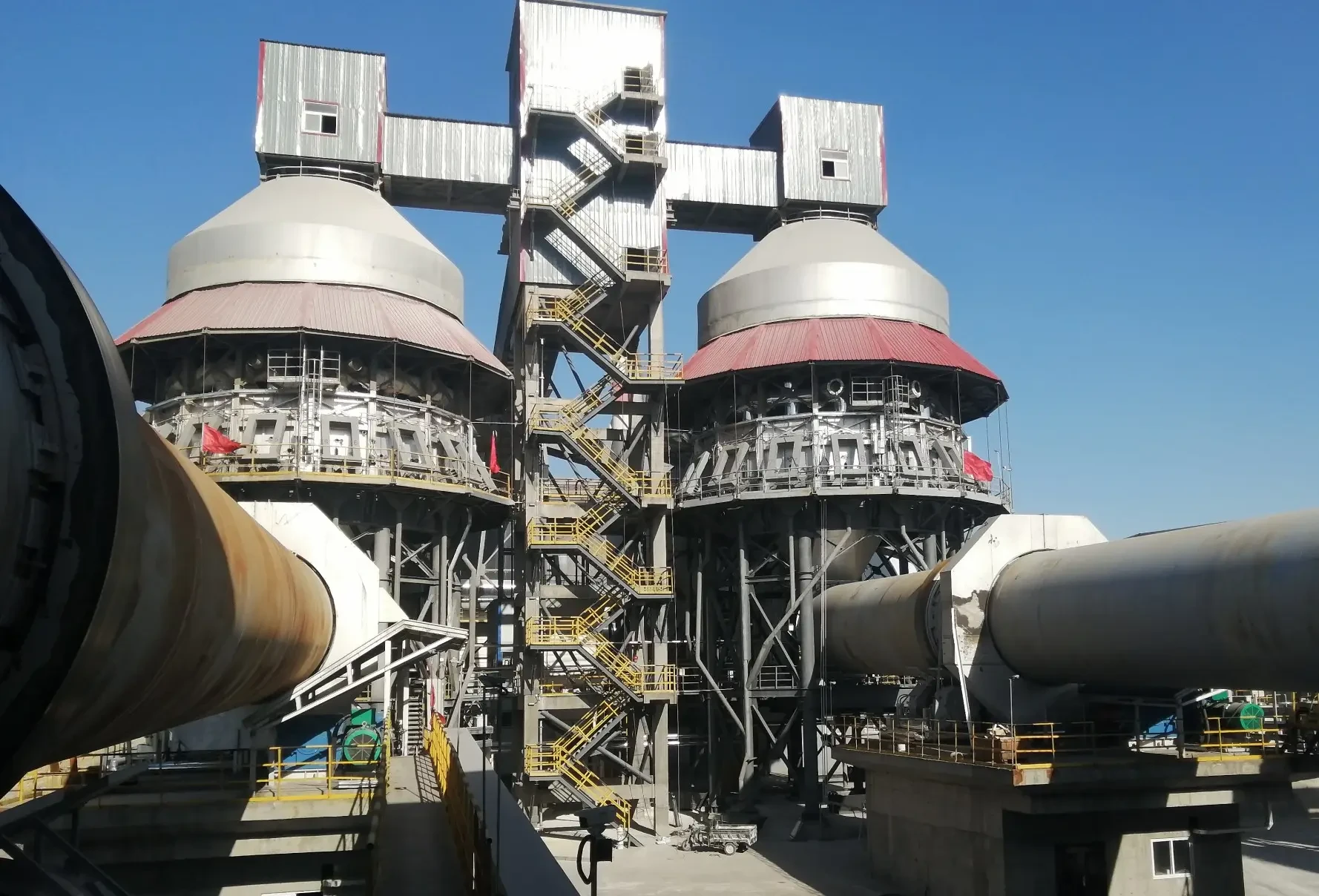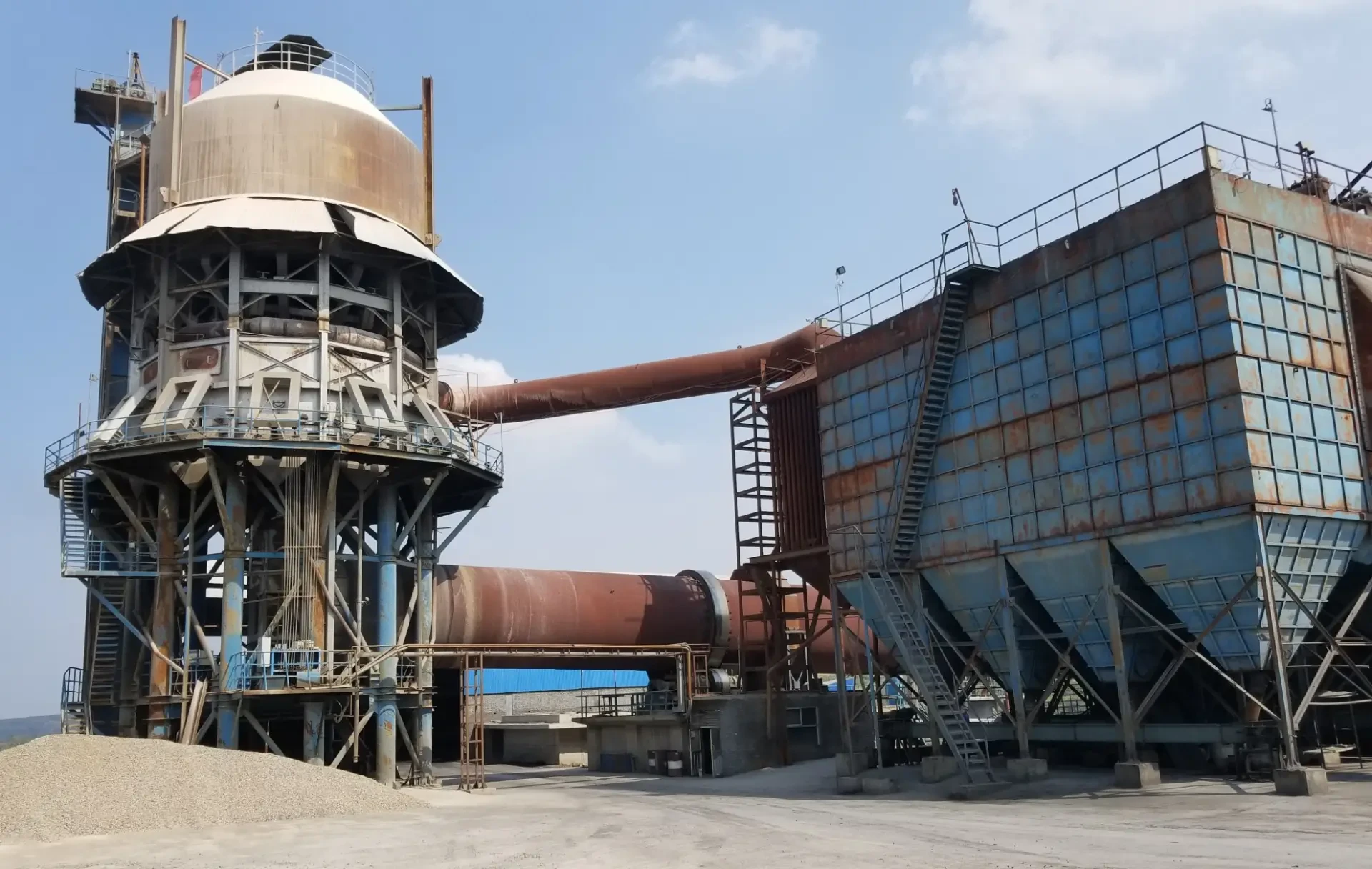
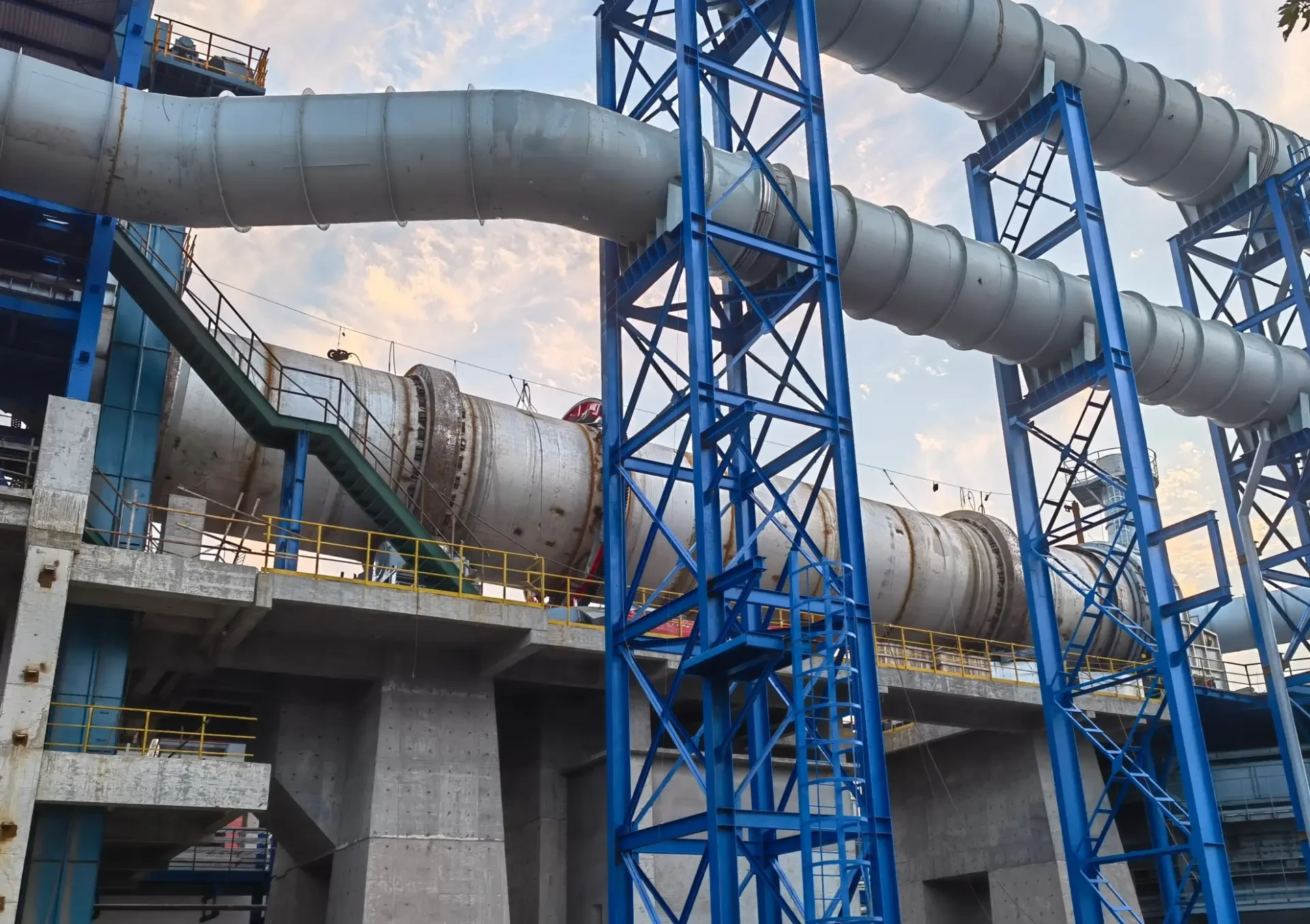
A steelworks in Africa consumes quicklime in three places at once: flux for blast furnace and EAF slag, dust treatment, and the plant's flue gas desulfurization circuit. Sizing, fuel planning and spares strategy all hinge on those three consumers — get any one of them wrong and the line either runs short or spends more than it should.
What the steel plant actually consumes
The flux number is the familiar one. The FGD consumer is the one most projects forget at sizing stage: it runs whenever the stack runs, independent of the steel schedule, and it wants consistent, reactive lime every hour of the year. A line sized only on the flux demand will be short exactly when the stack is on line. Model flux, dust and FGD together, then add campaign headroom.
Tropical conditions change the design
High ambient temperature and humidity attack quicklime in storage: the product picks up moisture and carbonates, losing reactivity in the silo before it reaches the consumer. The design answers sit at the cooling and storage end — cool the product below the ambient dew point before it enters storage, and manage silo temperature and residence time so the lime lands at the point of use at full activity.
Configuration for reliability
For African sites the practical circuit is crushing, air-swept vertical roller mill grinding — drying and grinding in one machine, which absorbs wet seasonal feed without a separate dryer — rotary kiln calcination, and a packaged wear-parts set. One supplier for the full auxiliary line, from quarry face to finished lime silo, keeps the interfaces under one engineering responsibility. DMTC's West Africa deliveries follow exactly this logic.
Spares through regional ports
Lead times from European or Asian ports to West African sites run in months, not weeks. A spares pack sized to that reality — the wear items with the shortest service life first, plus the refractory set for the first campaign — is what separates a line that holds availability from one that idles waiting for a liner. Remote commissioning support shortens the first campaigns while local crews take over; kiln systems of this class, up to the Φ5×72 m range, are well within established practice for FGD and flux duty.